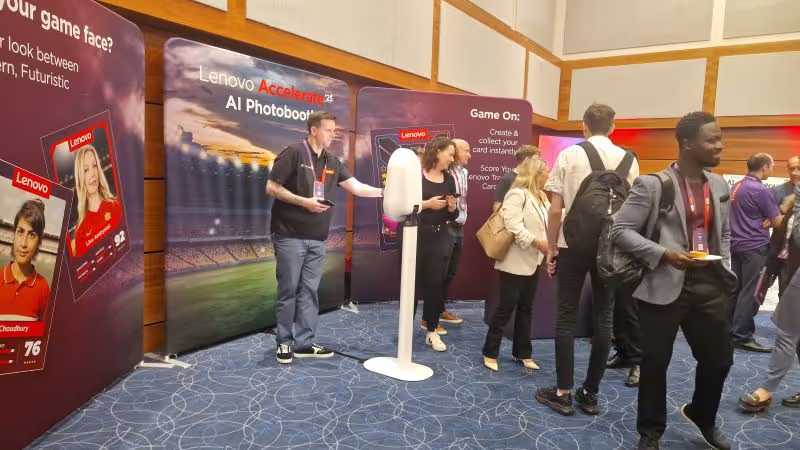
At Qlik Connect, a guest's hockey, golf or cycling score went from the leaderboard API onto a printed trading card in their hand while they waited at the booth. Qlik wanted its own product, live analytics, to be the thing that made the keepsake work.
Client: Qlik
The challenge: real-time scores on a physical card
Qlik, a leader in data and analytics, wanted more than a standard photo booth for its Qlik Connect conference. The brief was a "Qlik Games" activation, where how a guest performed at the booth in hockey, golf and cycling showed up on a card they took away. That put four demands on the build:
- Cards had to pull live stats, from race times to targets hit to distance to pin, straight from the Qlik Games leaderboard API.
- The AI had to generate sport-specific action shots while keeping each guest's face a clear likeness.
- The system had to handle two journeys: guests who had finished the games, showing full stats, and guests who had not yet played, showing pre-event branding.
- The interface and the printed cards had to read as a native part of the Qlik Connect brand.
The solution: data-driven AI trading cards
We built an API-connected AI trading card workflow. Attendees scanned their badge with a QR code, which fetched their latest game scores and dropped them into a custom template on the spot. Each of the three sports got its own tuned AI theme, with prompt engineering set to sport-specific detail: helmets for the cyclists, ice shards and light glare for the hockey players, so each shot read like a real pro-athlete portrait rather than a filter.
The card was personalized on both sides. The front carried the action shot and the guest's headline stats; the back held a QR code linking straight back to the global leaderboard. We handled the awkward data cases too, so long names and overflowing score strings stayed cleanly typeset whatever a guest's name and numbers turned out to be.
The results
Cards went out on social under the #QlikConnect hashtag. Because every card needed a badge scan, Qlik could tie each print to a specific guest and track booth engagement and game participation precisely. On-site crews ran high-volume printing throughout, so the card worked as a trophy and a business card at the same time.
Why it worked
Real scores made the card mean something. It became a badge of honor for the conference's best players rather than a generic giveaway. Rapid prototyping let us refine the action shots so they looked professional without distorting the guest's likeness, and a white-labeled interface made the whole thing feel like Qlik's own tool. The physical card sat on desks while its QR code kept sending people back to the live leaderboard, so a printed object carried on driving digital traffic after the show.
The format adapts to the room. AAA's cards at IndyCar put race fans in a Team Penske fire suit, Ondaro's at ServiceNow Knowledge worked a software conference, and Visit Pittsburgh's at IMEX a trade show floor. Qlik's difference was the data: the card only worked because the numbers printed on it were real and current.


.avif)