

Blog
Trade show marketing: the booth is only half the job
Trade show marketing: the booth is only half the job
Trade show marketing doesn’t end when the hall does. How pre-event creative, in-flow data capture and a post-show link turn booth traffic into pipeline.
By Gabriel Henwood, Chief Snapper
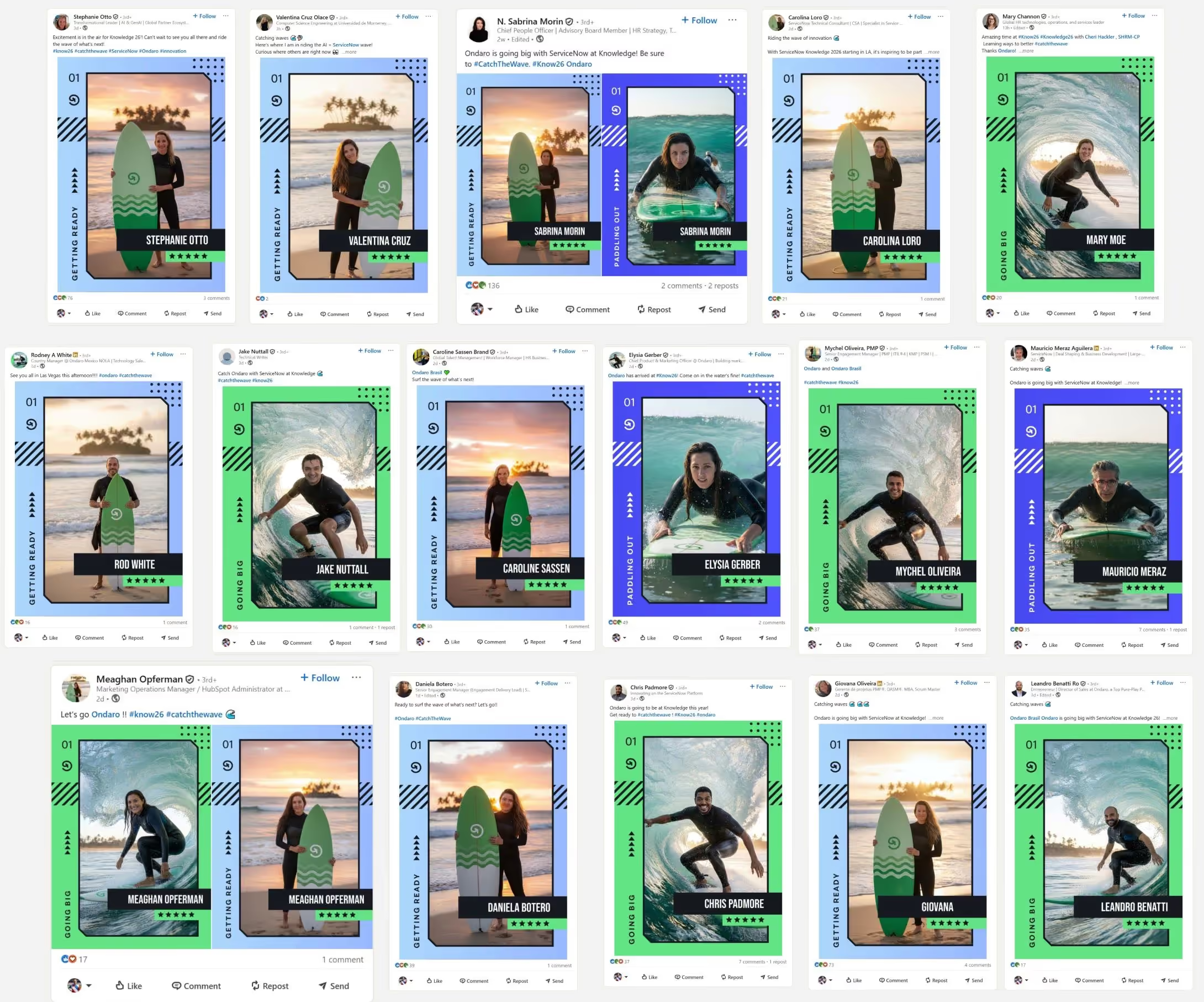
Two weeks before ServiceNow Knowledge 2026 opened at The Venetian, Ondaro’s executive leadership team pulled up our staging link on a global all-hands call and generated surf trading cards of themselves in front of the whole company.
The booth wasn’t built. The show floor was still two weeks out. That call is the part of trade show marketing most exhibitors never get to, and it’s a big reason the activation worked as hard as it did.
Foot traffic is the entry fee
Most trade show plans treat the booth as the whole event. Book the space, build the stand, staff it for three days, count the badge scans, fly home.
We build AI photo booths, and they’re very good at pulling a crowd. Foot traffic is the first thing almost every client asks about, and it’s a fair question, because a stand nobody walks up to has failed at the first hurdle. But foot traffic is the narrowest read available on what an activation can do, and it expires the moment the hall lights go off.
The activations that pay for themselves run in three phases. Only one of them happens at the show.
Before the show: use the creative you’ve already paid for
The creative for an AI activation exists before the show does. The theme is built, the model is tested, the link works, usually weeks out. Most clients treat that as an internal QA milestone and nothing more.
Ondaro treated it as a campaign. We’d built them a three-stage surf theme off their own consultation framework: “Getting Ready,” “Paddling Out,” “Going Big,” with branded surfboards generated from patterns in Ondaro’s internal brand assets rather than stock elements. All of it was ready before Knowledge opened, so their leadership showed the live app on that all-hands, and then the company posted.
The Chief People Officer posted. So did the Chief Product and Marketing Officer, the Director of Sales, the Country Manager for Ondaro Mexico, engagement leads, people from HR and global talent, and a technical writer. They ran from two weeks out to a few hours before the doors opened, and you can watch the campaign build in the timestamps: “Excitement is in the air for Knowledge 26” two weeks ahead, then “Ready to surf the wave of what’s next? Let’s go!!”, then “See you all in Las Vegas this afternoon!!!”
By the time the doors opened, Ondaro’s own network had already seen the creative, and so had a slice of the wider ServiceNow ecosystem. Attendees walked up to the booth knowing what it was and which card they wanted.
The best part is that this costs nothing extra. The theme is already built and already paid for. The only thing most exhibitors are missing is the decision to use it early, and a leadership team willing to go first.
ISPIM took the same idea and pointed it at registrations. The organizers of the ISPIM Innovation Conference needed their community talking about Bergen months ahead of the June dates, so we built an AI Viking theme and they ran it as their pre-event social campaign from February. Delegates generated their own Viking avatar and posted it under #BeInBergen. The campaign drew 1,226 participants and produced 2,452 unique AI portraits, for a conference ISPIM was inviting people to attend alongside “600 innovation professionals.”
That gap is the point. The 1,226 are delegates and their extended networks, and most of that second group was never going to be in Norway. An AI photo booth that only runs on the show floor can’t reach them.
Sina Bünte, from DigitalMind, who led the initiative, described what it did:
“The AI Vikings created a fun visual identity for our attendees and sparked a wave of posts in the weeks before the event. People shared their avatars on social media, which helped build momentum and gave a lighthearted sense of belonging to the #BeInBergen tribe.”
One detail from that job is worth stealing. When the conference opened, ISPIM kept the same AI photo booth running on site and simply dropped the pre-event branding overlay. One build, two jobs, no second budget.
At the show: put the data capture inside the experience
Ondaro’s stand was a 15’x20’ turnkey space with strict layout rules, and show regulations meant no live printing on the exhibition floor. Constraints like that are normal. They’re also why the on-the-day plan matters more than the stand render.
Two things turn a busy booth into pipeline.
The first is data capture that lives inside the flow instead of bolted on beside it. Our Gen 2 AI photo booth generates an image in 20 to 30 seconds, and we can put lead capture inside that window, so the thing your guest wants (their card) and the thing you want (their details) happen in the same half-minute. On the Will Power campaign in Canada we embedded a Typeform flow to meet Canadian data collection and compliance requirements, and it sat inside the journey without adding friction. Where a client needs it, we hook that capture straight into their sales funnel.
The second is a conversation your reps can actually start. Ondaro’s sales team used the jump from “Paddling Out” to “Going Big” as an icebreaker to explain enterprise automation. The theme was the pitch. That only works when the creative is aligned to the campaign rather than dropped on top of it.
The cards kept working after the hall closed, too. Handed out in protective top-loader sleeves at the evening VIP party at Wakuda, they held desk real estate long after Knowledge finished.
After the show: leave the link up
The activation can outlive the stand. We can keep the experience live as a link once the show ends, so attendees share it with the colleagues who didn’t make the trip, your follow-up email has something in it worth clicking, and the campaign keeps producing content while your reps work the leads.
The Will Power campaign shows how far that idea stretches, because it never had a show floor at all. We built a bilingual AI legacy portrait experience with Daughter Creative for the Canadian Association of Gift Planners, a campaign with more than 550 charity and advisor partners across Canada. It ran fully online, across provinces, in English and French Canadian, and it’s been live at willpower.ca/legacy since September 2025. No hall, no stand, no crew.
Treat that as the ceiling of the post-event idea. If the experience can carry a national campaign on its own, it can carry your follow-up sequence.
We changed what we sell because of our own trade shows
We exhibit too. We’ve run our own booths at PCMA, Confex and plenty of other shows, and this three-phase approach came out of our own stand rather than a strategy deck. Posting our generated content before a show brought people to us who already knew what they were coming for. Leaving the link live afterwards kept conversations running into the following week. It worked well enough on us that we changed what we offer clients to match.
More of this work: our booth at InfoComm and an exhibition-stand activation. To plan your own, see our AI photo booth and AI trading cards.
What to ask for
Briefing an AI photo booth activation for a trade show? Three questions get you most of the value.
- Ask when the theme will be finished, and get it in your team’s hands early enough to run pre-event comms. If the answer is “the night before,” you’ve lost a whole phase.
- Decide where the captured data lands before the show rather than after. Straight into the CRM beats a spreadsheet emailed on the Friday.
- Agree how long the link stays live and who’s sending it out.
The booth will get you the crowd. What you do in the two weeks either side decides whether the crowd was worth the floor space.
See the full Ondaro AI trading cards activation at ServiceNow Knowledge 2026 and the ISPIM Bergen pre-comms campaign.


Snapmatic AI creates highly engaging AI-powered photo & video experiences. Increase your event engagement and brand awareness with shareable, user-generated content that gets people talking!

